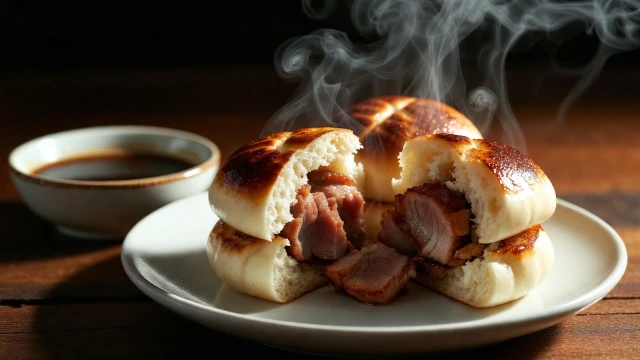
Master the Ultimate Kurobuta Pork Buns Recipe
Make the ultimate Kurobuta Pork Buns Recipe at home with ultra-fluffy baozi filled with rich, melt-in-your-mouth Kurobuta pork. Perfect for fans of gua bao, xiao long bao (sio bao), or char siu bao, these Chinese steamed buns deliver restaurant-quality flavor with easy homemade steps. Steam, pan-fry, or bake your buns—and download the printable recipe PDF to get started instantly!
For the authentic history and knowledge of Pork Buns, Char siu bao, and Kurobuta Buns , you can visit our dedicated guide page.
⏱ Recipe Overview (Quick Facts)
| Category | Details |
|---|---|
| Name | Kurobuta Pork Buns Recipe |
| Recipe Type | Steamed buns (Bao / Baozi) |
| Cuisine | Chinese / Taiwanese / Japanese fusion |
| Prep Time | 2 hours (includes dough rising) |
| Cook Time | 15–20 minutes per batch |
| Servings | 8–12 buns |
| Skill Level | Intermediate (detailed steps for beginners) |
| Storage | Refrigerate 2 days, freeze up to 1 month |
| Cooking Method | Steam, pan-fry (sheng jian bao), bake, air-fry |
| Key Ingredients | Kurobuta ground pork, bao flour, yeast, soy sauce, oyster sauce, ginger |
| Popular Variations | Char siu bao, gua bao pork belly, xiao long bao soup buns |
This homemade pork bao recipe overview helps you plan your authentic Chinese steamed pork buns session.
🥗 Nutritional Information (Per Bun – Approximate) in the Kurobuta Pork Buns Recipe
These Kurobuta buns nutrition facts are estimates based on the recipe yielding 10 average-sized buns (one serving = 1 bun). Values can vary slightly depending on exact portioning, bun size, Kurobuta pork fat content (higher marbling adds richness compared to lean pork), and any custom adjustments like added milk in dough or extra stock in filling. Homemade versions allow better control over sodium and ingredients than store-bought or restaurant options.
| Nutrient | Amount | %DV |
|---|---|---|
| Calories | 350 kcal | 18% |
| Total Fat | 22g | 28% |
| Protein | 25g | 50% |
| Total Carbohydrates | 18g | 7% |
| Sodium | 520mg | 23% |
Additional Notes:
- These steamed pork buns are a good source of B vitamins (from pork) and iron. The steaming method preserves nutrients better than frying.
- Compared to typical commercial pork bao (often 200–300 calories with less protein), this premium Kurobuta pork buns recipe offers more protein and flavor density per calorie.
- For lighter versions: Use leaner pork cuts or reduce the filling amount. Pair with steamed greens or a side salad for balanced nutrition.
- Always consult a nutrition calculator or app for precise tracking if you modify ingredients.
This nutritional breakdown helps with meal planning, especially for those searching for Chinese steamed pork buns calories or homemade baozi nutrition facts.
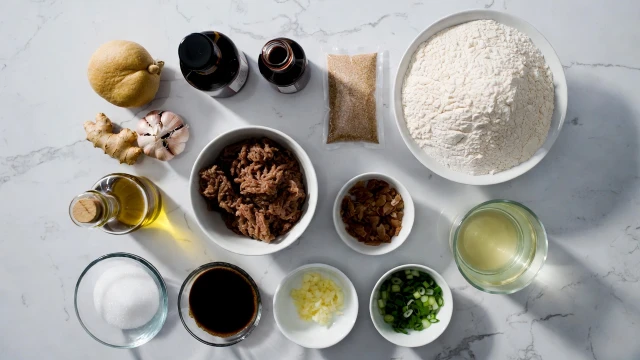
🥢 Ingredients – For Fluffy Dough and Juicy Kurobuta Pork Filling
High-quality ingredients are essential for authentic Kurobuta pork buns recipe results. Kurobuta pork (Berkshire heritage breed) stands out with its rich marbling and deep flavor—far more tender and umami-packed than standard pork, justifying the “wagyu of pork” nickname. Opt for ground shoulder or belly cuts (70/30 fat ratio ideal) to ensure the filling stays succulent after steaming.
Dough Ingredients (Pillowy Soft Bao Buns – Makes ~12 buns)
- Bao flour (or high-gluten flour) – 300g: Provides chewiness and structure; substitute all-purpose if needed, but expect slightly denser texture. You can find high-quality bao flour and other Asian pantry essentials at Asian Food Grocer.
- Active dry yeast – 1 tsp (or instant yeast for faster rise): Drives fermentation for airy pockets.
- Granulated sugar – 2 tbsp: Fuels yeast and subtly sweetens to contrast savory filling.
- Warm water (100–110°F / 37–43°C) – 150ml: Activates yeast gently; too hot kills it, too cold slows rise.
- Vegetable oil – 1 tbsp: Enhances tenderness and prevents dry dough.
- Baking powder – 1/2 tsp: Gives extra lift during steaming for maximum fluffiness.
Fluffiness Tip: For even softer results, replace 20–30ml water with milk or add 1 tbsp lard/shortening—common in traditional baozi for cotton-like texture.
Kurobuta Pork Buns Recipe Filling Ingredients (Rich & Juicy – ~400g total)
- Kurobuta ground pork (shoulder or belly) – 400g: Premium choice for juicy, flavorful bursts; its fat renders beautifully.
- Soy sauce – 2 tbsp: Savory backbone with fermented depth.
- Oyster sauce – 1 tbsp: Adds glossy sweetness and umami boost.
- Sesame oil – 1 tsp: Nutty aroma that finishes the filling.
- Ginger (finely grated) – 1 tbsp: Cuts richness with zing.
- Garlic (minced) – 2 cloves: Builds aromatic layers.
- Sugar – 1 tsp: Balances saltiness.
- Shaoxing wine or dry sherry – 1 tbsp: Tenderizes meat and adds complexity.
- Cornstarch – 1 tsp: Binds and retains moisture for juicy results.
- Chopped scallions – 2 tbsp: Fresh crunch and mild onion note.
Juiciness Hack: Mix in 1–2 tbsp cold water or stock during filling prep—this creates steam pockets for burst-in-mouth effect, a classic baozi technique.
These ingredients create balanced, restaurant-style Chinese steamed pork buns with a luxurious Kurobuta twist.
🥡 Step-by-Step Instructions – How to Make Fluffy Steamed Pork Buns
This Kurobuta pork buns recipe step by step draws from authentic baozi methods for foolproof success.
Step 1: Prepare the Fluffy Bao Dough
- Activate yeast: Dissolve sugar and yeast in warm water; rest 8–10 minutes until foamy (proof of life).
- Mix dry: Whisk bao flour and baking powder.
- Combine: Add yeast liquid and oil; stir to shaggy dough.
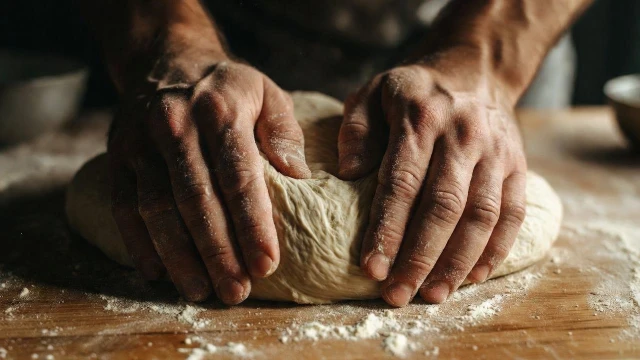
- Knead: 10–12 minutes by hand (or 8 in mixer) until smooth, elastic, and slightly tacky. Test: Poke—dough springs back slowly.
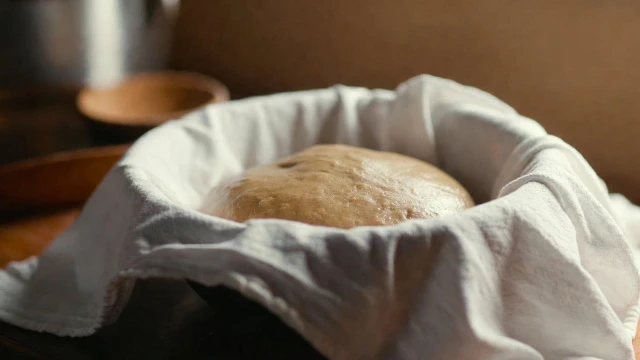
- First rise: Oil bowl, cover dough, rise in warm spot (75–85°F) ~1 hour until doubled. Avoid drafts.
- Divide: Punch down, portion into 12 equal balls (~40–50g); rest covered 15 minutes.
Troubleshooting: Dense buns? Under-proofed—extend rise. Over-kneaded? Dough tough—knead gentler next time. Pro Tip: One-rise method (no second proof after shaping) works if using instant yeast and warmer proofing.
Step 2: Make the Juicy Kurobuta Pork Filling
- Season base: Mix pork with soy, oyster sauce, sesame oil, sugar, cornstarch, ginger, garlic, Shaoxing wine.
- Hydrate & bind: Stir in 1–2 tbsp cold water/stock; mix vigorously until sticky (develops texture).
- Add greens: Fold scallions last.
- Chill: Refrigerate 20–40 minutes—firms up for easy wrapping, melds flavors.
Pro Tip: Overmixing makes filling tough—stop when cohesive. For extra juiciness, add finely chopped cabbage or mushrooms (traditional variation).


Step 3: Assemble Authentic Pork Bao
- Roll: Flatten ball to 4–5 inch disc (thicker center, thin edges).
- Fill: 1–2 tbsp center; avoid overfilling.
- Pleat: Gather edges, twist clockwise 18–20 pleats; pinch seal tightly.
- Rest: Place on parchment squares; rest 15–20 minutes (optional light second proof).
Pro Tip: Practice pleating on plain dough first. Use parchment to prevent sticking and easy transfer.


Step 4: Steam for Perfect Fluffy Texture
- Prep: Boil water; line steamer with parchment/cabbage leaves.
- Arrange: Space buns 2 inches apart (they expand).
- Steam: Medium heat, 15–20 minutes (no peeking—condensation ruins surface).
- Rest & serve: Cool 2–3 minutes; enjoy immediately.
Pro Tip: Wrap lid in towel to absorb drips. Test doneness: Bun springs back when touched.


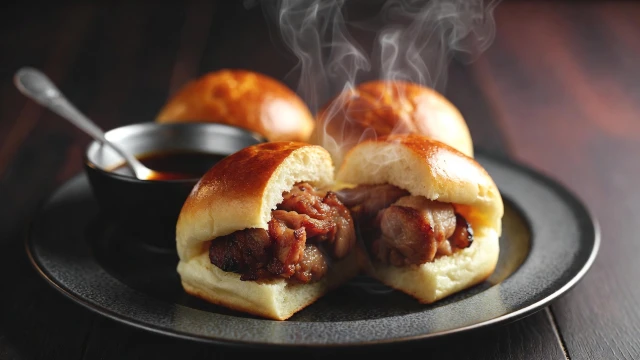
Step 5: Alternative Methods for Variety
- Pan-fried (Sheng Jian Bao): Fry bottoms golden in oil, add water, cover-steam 8–10 minutes for crispy base.
- Baked: Egg wash; 375°F (190°C) 15–20 minutes—crustier exterior.
- Air fryer: Oil spray; 350°F (175°C) 10–12 minutes, flip halfway—quick and low-oil.
🌏 Regional & Style Variations of Pork Bao Recipes
- Chinese Char Siu Bao: Swap filling for chopped char siu (BBQ pork) in hoisin-sweet sauce; often baked/steamed hybrid. Sweeter, saucy interior.
- Taiwanese Gua Bao: Use braised Kurobuta pork belly, pickled mustard greens, crushed peanuts, cilantro; folded open bun for street-food style.
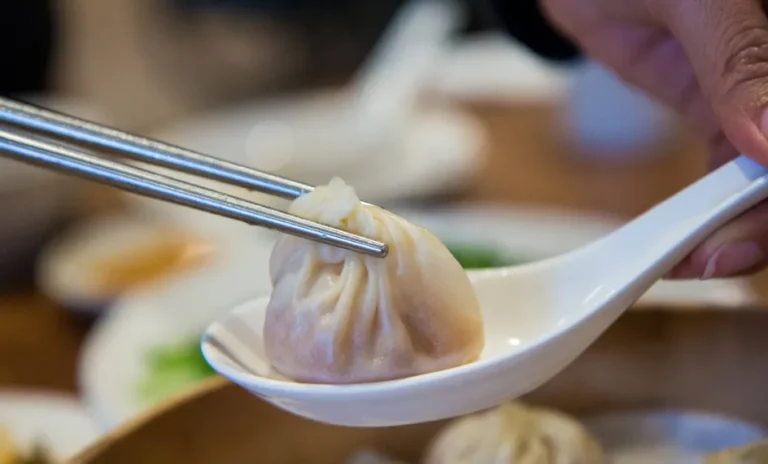
- Xiao Long Bao (Soup Buns): Add gelatinized stock to filling—melts into soup. Requires expert sealing.
- Japanese Nikuman: Sweeter dough, add shiitake/cabbage to pork; convenience-store favorite.
- Fusion Ideas: Korean-inspired with gochujang/kimchi; vegetarian with tofu/mushrooms.
These showcase bao’s versatility beyond basic steamed pork bao. You can explore other authentic Chinese bao recipes with detailed guides on Serious Eats for more inspiration and techniques.
🛒 Buying, Frozen & Near-Me Searches for Pork Buns
Premium Kurobuta pork (Berkshire) from Snake River Farms or specialty butchers. Frozen alternatives: Costco, Wei Chuan brands. Search “Chinese pork buns near me” for fresh dim sum spots. Steam frozen buns directly 12–15 minutes.
❄️ Storage, Freezing & Reheating Homemade Bao Buns
- Refrigerate cooked buns airtight 2 days.
- Freeze raw/assembled or cooked up to 1 month (tray-freeze first).
- Reheat: Steam 12–15 minutes (best texture), pan-fry for crisp, or air-fry.
👨🍳 Chef Tips & Secrets for the Best Pork Buns
- Use fresh yeast—test activation every time.
- Chill filling thoroughly—easier pleating, juicier steam.
- Pleat tightly clockwise; seal with twist to lock juices.
- Towel-wrapped lid prevents condensation drips.
- Overnight pork marinade (soy/oyster/Shaoxing) deepens flavor.
- Proof in warm oven (off, light on) for consistent rise.
- Weigh ingredients—accuracy beats volume measures.